
Praise for Spoke:
To fathom healing, we must first know the wound. In her moving collection, Arden Levine unpacks the wounds, offering attention that is by equal measures tender and forensic. “How many of his messages will I / unheap from the dash,” a speaker asks, "untuck from the seats, / unperil from the still-alight ashtray?” Spoke creates a taxonomy of grief that is as surprising as it is capacious, locating moments of elegy in handwritten letters, in music, and even in cake. The author’s hidden weapon is her wry precision, as when one poem observes, "Most people get about eighty autumns. / But, when put that way, it seems / a scam, the rest held below the counter, the merchant awaiting a collector.” These aren’t just poems—they're access points to a complex personal chronicle and, more importantly, they are invitations to dialogue. Spoke offers beautiful revolutions of language and, within each turn, a revelation.
– Sandra Beasley, author of Made to Explode (W. W. Norton)
What do bicycles and parking lots, pies and funeral homes, Joni Mitchell and Dolly Parton all have in common? They are figures in the emotionally powerful poems of Spoke by Arden Levine. A poet known for her craft as well as art, Levine has created a collection that whispers, shouts, and sings in sorrow, rage, and tortured memory. Yes, sings: In their terse and truthful way, these poems reveal the living music of father/daughter relationships, guilt, grief, and deep, abiding love. Spoke shifts forms, breaks genres, and quotes pop tunes to tease out, tear up, and temper a woman’s emotional journey. What a ride. Join her.
– Patricia Spears Jones, author of The Beloved Community (Copper Canyon Press)
See Press & Events for more.
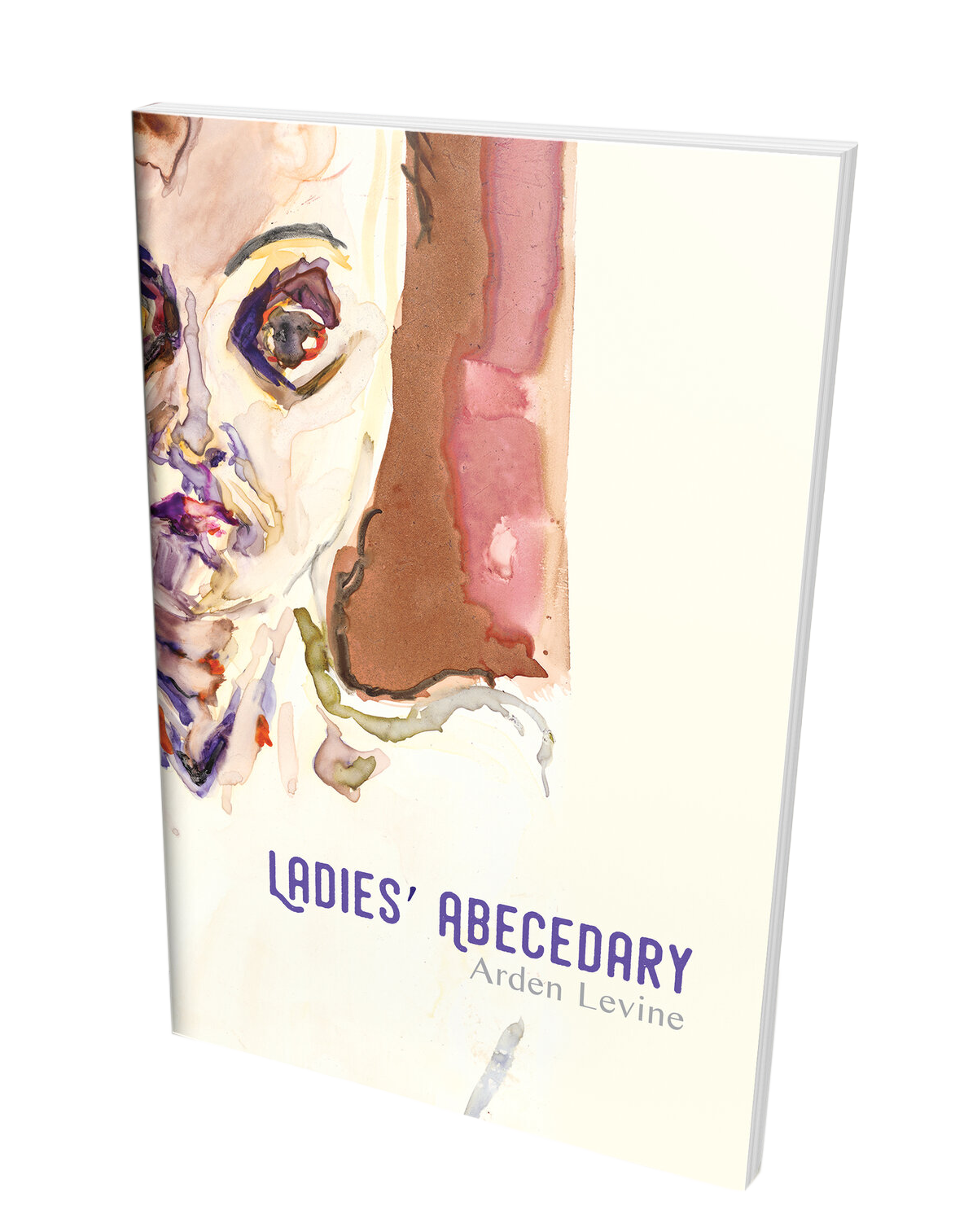
Praise for
Ladies’ Abecedary:
Like a deck of playing cards, shuffled, fanned, dealt and swept away with a flourish, Arden Levine’s Ladies' Abecedary delights and dazzles. In this alphabetic parade, portraits of women’s lives flash past our eyes. Designated by only a letter and the “glittering shrapnel” and “high-heeled balancing acts” of Levine’s descriptions, we can’t be certain who or where or when these women live. Yet each life, each poem, feels vivid and energetic, bristling in forms that range from pantoums to prose poems. So we lean in closer to the mystery, keen to catch a fuller glimpse of each sharp life and not to miss the “twisting silver” sleight-of-hand taking place on the page.
—Kirun Kapur, author of Women in the Waiting Room (Black Lawrence Press)
The poems in Ladies’ Abecedary are self-aware “like warring starlings” and serve as a prayer to the imagination and craft. The female voices in these poems, ranging from cooks to scientists, push against stereotypes by exposing women’s “voices between walls.” They acknowledge the pursuit of safety, what women say to each other in secret, and how words help build identity. These women are more than just ladies. While Levine commits to the abecedary form, she is never a slave to it. Each poem has a volta, unexpected turns, deadpan humor, and windchimes. This collection belongs on your shelf.
—Cynthia Manick, author of No Sweet Without Brine (Amistad/HarperCollins)
See Press & Events for more.